Be Energy Friendly – and Know Our Heating Policy
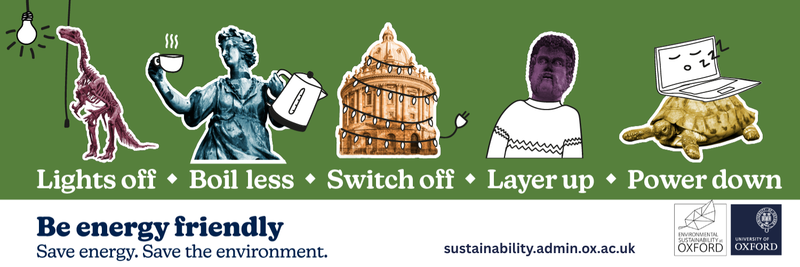
During winter, students are reminded to be energy friendly.
In previous years, the Blackfriars community has worked together to reduce our energy use during the winter months. This has resulted in a significant reduction in energy consumption, which we would like to build upon.
Once again, this year, energy-saving policy measures are put into place, including setting ambient temperature in 33 St Giles to 19 degrees. This is in line with the EU and World Health Organisation guidance to heat buildings. Additional information for building managers is available in this guide.
Our Heating and Cooling Policy, and how to use our heating systems safely and sustainably
In Blackfriars accommodation, we ask all our students to abide by the Hall’s Heating Policy and to treat our heating systems responsibly. All rooms include a thermometer to help you monitor whether the room temperature is at a reasonable level of comfort.
For more information on our heaters and how to use them efficiently, please see our information about accommodation heating and appliances.
Reducing your energy consumption
You can play your part in reducing energy consumption by following the steps below. These ideas are not new, but they may not be front of mind; try and build them into your daily routine and wherever possible:
- Lights off: turn off the lights if you’re the last one to leave the room.
- Boil less: only boil as much water as you need (this could save £3 per day per kettle).
- Layer up: bring a jumper for comfort during the winter months.
- Switch off: turn off appliances at the socket when not in use, and keep portable electric heaters off.
- Power down: turn off your computer and screen at the end of the working day, and make sure your computer is set to ‘hibernate’ if you’re away from your desk.
With more than 26,000 students and 14,000 staff members taking these actions across Oxford, the cumulative effects will save a significant amount of both money and carbon emissions. For example, reducing the ambient temperature in all Blackfriars buildings by just one degree can save
Energy saving tips
The following tips can be found on the University’s sustainability website.
|
What can I do? |
Where? |
| Reduce the setting of your heating thermostat, at home and in the office (where possible). For every degree, you can save about 8% on your heating costs. Please note that the recommended temperature is 19°C in winter, in line with World Health Organisation and EU guidance.
Wear a jumper and warm socks when at home or in the office. |
Office/work
Working from home Home |
| Take shorter showers and be aware of hot water use in general, as water heating consumes a lot of energy. A fun way to measure this is by singing a three-to-four minute song while showering. | Home
Office/work |
| Switch off appliances at the socket. It makes a difference! | Office/work
Working from home Homes |
| Turn off the computer and screen at the end of a working day or when stepping away for a break. | Office/work
Working from home |
| Dress for the weather – bring a jumper to work. | Office/work
Working from home Home |
| Be sure to close fume hoods in laboratories – it can save £2-4k per fume hood (we have 800 of them in Oxford) | Laboratory |
| If you are using a kettle for hot water, only boil as much water as you need (this could save £3 per day per kettle). | Office/work
Home |
| As much as possible avoid personal electric heaters (they consume a lot of energy can increase the risk of fires) | Office
Home |
| Make sure you use heating and lights only in the rooms you need. | Working from home |
| Close windows and curtains when the heating is on. | Office/work
Working from home Homes |
| Install efficient lighting by your workstation or at home, e.g. an LED light. | Office/work
Home (suitable for rented housing) |
| Adjust the timer on your heating system and water heating – don’t heat an empty house. | Home (suitable for rented housing) |
| Use energy efficient appliances. Look for the energy efficiency label which ranges from A+++ to D, from best to worst respectively. | Home (suitable for rented housing) |
| Your fridge freezer is a significant energy consumer. Don’t leave it open for a long time, make sure to de-ice your freezer and if you have a lot of empty freezer space, fill it with bread or containers filled with water. This will reduce air circulation when using it and keep the temperature more stable. | Home (suitable for rented housing) |
| Use dishwasher on full load and wash your clothes at a lower temperature. Use the “eco programme” if available. | Home (suitable for rented housing) |
| When house hunting, check the EPC (Energy Performance Certificate) which marks the efficiency of your house from A, the best, to G the worst. Consider energy costs as part of your renting budget. | Home (suitable for rented housing) |
| Use a radiator reflector. These are inexpensive, suitable for rented homes, and prevent the heat from warming the walls rather than the room. Read more here. | Home (suitable for rented housing) |
| Look for draughts and seal them, such as with a rug. | Home (suitable for rented housing) |
| Give meter readings or ask for a smart meter. Knowledge is power, and monitoring your consumption helps you to save energy. | Home (suitable for rented housing) |
| Insulate – roof insulation, curtains, and wall vegetation all contribute to energy efficiency. Read more here. | Home |
| Set the water temperature in your boiler. By adding cold to your hot water to make it the right temperature, you are wasting energy, money, and carbon. | Home |
| Introduce low flow, high-pressure shower heads. You can save up to 25% of hot water consumption. | Home (suitable for rented housing) |
| Make sure your kitchen and bathroom fans are working – efficient fans reduce the need to open windows. | Home |
| Electric oven and induction hob are the most efficient ways to cook. If using the hob, put a lid on your pan when cooking. | Home |
| Look out for more energy saving tips from trusted sources such as Energy Saving Trust. | Home (suitable for rented housing) |